
Finding the right product is still the single biggest variable separating profitable dropshipping stores from ones that quietly fade out after a few months. Everything else (ad creative, store design, customer service) matters, but none of it makes up for a product nobody wants. That's why dropshipping product sourcing tips are some of the most searched, and most misunderstood, topics in e-commerce.
This article breaks down the two main sourcing approaches available today, traditional manual research and AI-assisted sourcing, and gives you a practical framework for deciding which one (or which combination) fits your business. Along the way I'll cover supplier evaluation, red flags, a comparison of sourcing platform types, and a workflow you can start using this week.
Why Product Sourcing Still Determines Success or Failure
Before comparing methods, it's worth being clear about what "good sourcing" actually means. A winning product isn't just something trending on TikTok. It needs to satisfy several conditions at the same time:
- Solves a real, specific problem or taps into an emotional desire
- Has healthy margins after shipping, ad spend, and platform fees
- Isn't already saturated by hundreds of competing stores
- Can be sourced reliably with consistent quality and lead times
- Has visual or demonstrable appeal for short-form video content
Miss any one of these and even a well-run store struggles. That's the core reason sourcing deserves more time than most beginners give it. If you're new to the model, Shopify's dropshipping guide covers the basics, and I walk through the full setup in How to Start Dropshipping With AI.
Manual Product Sourcing: The Traditional Approach
Manual sourcing means doing the legwork yourself: scrolling marketplaces, studying competitor ads, and building supplier relationships one conversation at a time. It's slower, but it has real advantages that AI tools haven't fully replicated yet.
Common Manual Sourcing Methods
- Marketplace browsing. Scanning large supplier marketplaces and dropshipping catalogs for rising products with growing order volume.
- Competitor ad research. Using public ad libraries, like the one Meta runs, to see what competitors are actively promoting and for how long.
- Trend forums and communities. Reddit niches, Facebook groups, and TikTok hashtags where early product chatter shows up before it hits mainstream ad platforms.
- Trade shows and B2B directories. Particularly useful for sellers who want unique, non-saturated products outside the typical dropshipping catalog.
- Supplier direct outreach. Contacting manufacturers directly through B2B marketplaces to negotiate private labeling or exclusive arrangements.
Strengths of Manual Sourcing
- Deeper understanding of supplier reliability through direct conversation
- Better negotiating leverage once a relationship is established
- Greater ability to spot genuinely novel products people intuitively recognize as desirable
- No dependency on software subscriptions or algorithm accuracy
Weaknesses of Manual Sourcing
- Very time-intensive; serious research can eat many hours every week
- Prone to confirmation bias, where sellers fall in love with products instead of evaluating data objectively
- Harder to track demand signals across multiple platforms at once
- Slower reaction time to emerging trends compared to automated monitoring
AI-Assisted Product Sourcing: The Modern Approach
AI-assisted sourcing uses software, often powered by large language models and trend-detection algorithms, to analyze large datasets of ad spend, search volume, social engagement, and sales velocity far faster than a human researcher could.
Tools in this category typically pull from multiple data sources: ad libraries, marketplace APIs, social listening tools, and sometimes their own databases of products that are already selling. A whole category of ad-spy and product-research subscriptions has been built around this exact workflow.
How AI Sourcing Tools Typically Work
- They scan thousands of active ads and flag ones with unusually long run times, a strong signal that the ad is profitable
- They cross-reference search volume and seasonal trend data, similar to what you'd see in Google Trends
- Some generate AI-written product descriptions, ad angles, and even predicted profit margins
- Many integrate directly with Shopify or WooCommerce for one-click product imports
Strengths of AI-Assisted Sourcing
- Cuts research time dramatically, often from hours to minutes
- Brings up data-backed signals (ad longevity, engagement velocity) that are hard to track manually
- Lets you test far more product ideas in the same amount of time
- Increasingly plugs into automation workflows for listing creation and ad copy generation
Weaknesses of AI-Assisted Sourcing
- Tools can show the same "winning" products to thousands of other users at once, which speeds up saturation
- Subscription costs add up, especially when testing multiple platforms
- AI recommendations still need human judgment to filter out noise
- Over-reliance can lead to copy-paste stores with no differentiation
I go deeper on keeping a research tool in its lane in AI Product Research Tool Dropshipping Workflows. The short version: AI should speed up your judgment, not replace it.
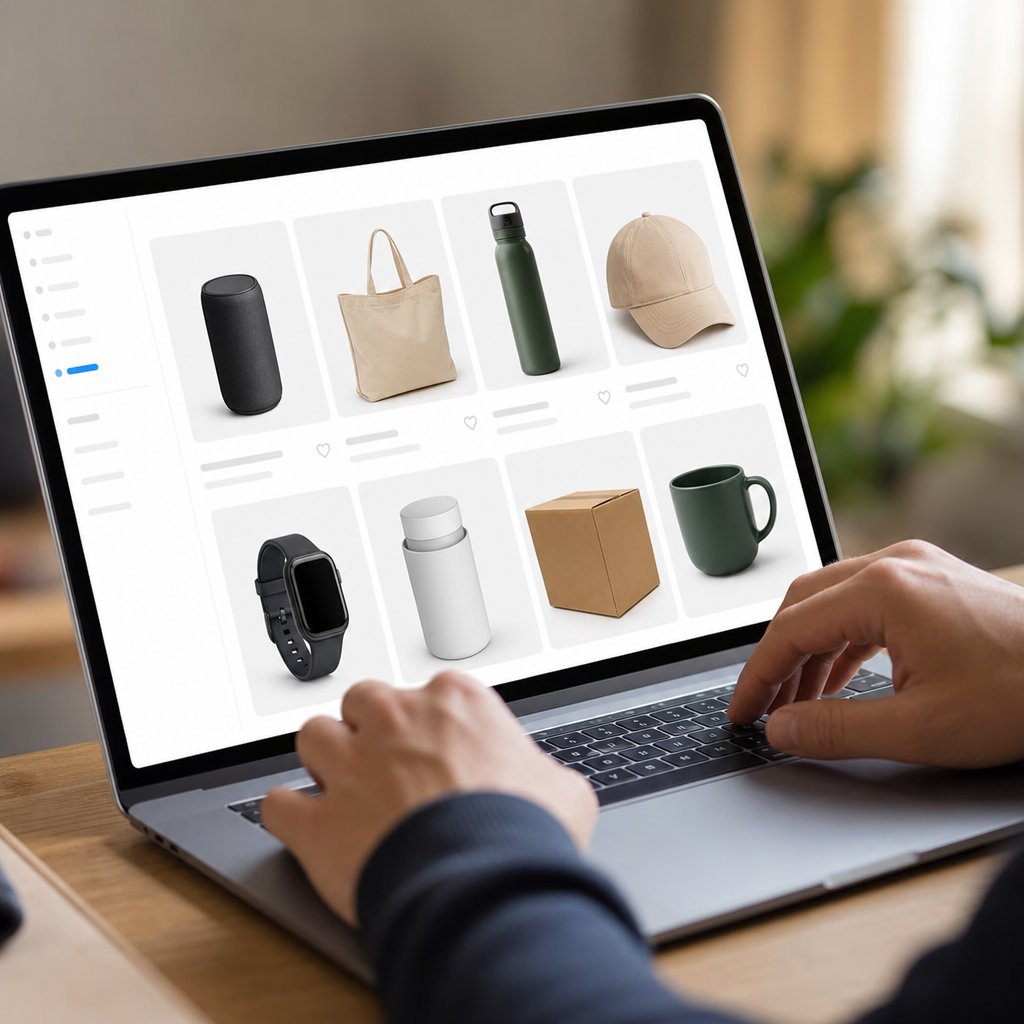
Head-to-Head Comparison: Manual vs. AI Sourcing
| Factor | Manual Sourcing | AI-Assisted Sourcing |
|---|---|---|
| Time investment | High (many hours a week) | Low (a few hours a week) |
| Cost | Mostly free, paid for in time | Monthly tool subscriptions |
| Speed to identify trends | Slower, reactive | Faster, often proactive |
| Risk of saturation | Lower (fewer competitors find the same product) | Higher (shared tool databases) |
| Supplier relationship depth | Stronger over time | Weaker unless built manually |
| Learning curve | Steep, but builds real market intuition | Moderate, tool-dependent |
| Best for | Niche, long-term brand building | Fast testing, volume-based store models |
As the table shows, neither approach is better across the board. The right choice depends heavily on your business model, whether you're running a high-volume testing store or building a single evergreen brand.
Evaluating Suppliers: The Step Most Sellers Rush
However you find a product, supplier evaluation is where many dropshippers cut corners, and it's where most long-term problems start. A product can have perfect demand signals and still fail because of poor fulfillment.
Key Supplier Evaluation Criteria
- Response time. Suppliers who take more than 24 to 48 hours to answer basic questions are a warning sign.
- Sample ordering. Always order a sample before committing to listings. Print quality, packaging, and shipping speed often differ from the marketing photos.
- Production capacity. Ask directly how many units they can produce each week, especially before running paid ads at scale.
- Reviews and verification badges. On B2B marketplaces, verified-supplier badges and buyer-protection programs reduce (but don't eliminate) risk.
- Shipping time transparency. Confirm actual average delivery windows rather than relying on optimistic marketing claims.
If you sell in the U.S., the FTC's guidance on online advertising disclosures is worth a read, since your shipping promises and ad claims both have to be accurate.
Comparing Sourcing Platform Types
Many sellers ask which sourcing platform is "the best," but each type serves a slightly different purpose. Here's how the common categories compare.
| Platform Type | Primary Use Case | Typical Cost | Best For |
|---|---|---|---|
| General supplier marketplace | Direct product sourcing | Free to browse | Beginners, low-commitment testing |
| Sourcing agent with fulfillment | Sourcing plus warehousing and shipping | Free to start, paid services | Sellers needing faster U.S./EU shipping |
| Ad spy and trend tool | Ad research and trend detection | Monthly subscription | Fast product testing at scale |
| Product research database | Product and supplier research | Monthly subscription | Data-driven niche validation |
| B2B wholesale marketplace | Bulk and private label sourcing | Free to browse, negotiated pricing | Brand builders, higher MOQ orders |
Choosing between these usually comes down to budget and business stage. Sellers testing their first few products rarely need an expensive suite of AI tools. That money usually does more as ad testing budget.
A Practical Hybrid Workflow
Rather than treating this as an either/or decision, a hybrid approach that blends AI speed with manual verification usually works best. Here's a simple version worth testing:
- Use an AI tool to build a shortlist of 15 to 20 products based on ad longevity and engagement signals.
- Manually research each product's competition level using Meta's ad library and TikTok's Creative Center.
- Cross-check search demand over a 12-month period in Google Trends so you don't chase a short-lived fad.
- Contact 2 to 3 suppliers per shortlisted product to compare pricing, MOQs, and shipping times.
- Order samples for your top 3 to 5 candidates before committing ad budget.
- Launch small test campaigns on modest daily budgets across your top candidates to gather real performance data before scaling.
This structure avoids both extremes: blindly trusting an algorithm, and spending weeks sifting through marketplaces with no data behind your decisions. If you want to push the shortlist step further with agents, I cover that in How I Use AI Agents to Find Winning Products.

Common Sourcing Mistakes to Avoid
Even experienced sellers fall into predictable traps. Watching for these early can save a lot of wasted ad spend:
- Chasing saturated viral products without checking how long they've already been running in the market
- Ignoring shipping cost math. A product with great margins on paper can lose money once real shipping costs are factored in.
- Skipping samples to save a week of lead time, then finding quality issues after launch
- Over-trusting AI-generated profit projections, which are often based on incomplete or outdated ad spend data
- Sourcing from a single supplier with no backup, which creates fulfillment risk if that supplier runs out of stock
For more on spotting a product before it saturates, see How to Use AI Product Sourcing to Find Winning Items Before Your Competitors Do.
How to Decide Which Approach Fits Your Business
Use this quick self-assessment to figure out which sourcing method, or blend, makes sense for your current stage:
- If you're testing your first 5 to 10 products: Lean manual. Build intuition before paying for tools you don't yet know how to interpret.
- If you're running multiple stores or testing weekly: AI tools pay for themselves quickly, since the time saved outweighs the subscription cost.
- If you're building a single long-term brand: Prioritize manual supplier relationships and private labeling over algorithmic trend-chasing.
- If you're bootstrapped with a limited ad budget: Start manual, then reinvest profits into AI tools once you've validated at least one winning product.
This decision framework matters more than which specific tool you choose. Match how sophisticated your tools are to your business stage, instead of adopting every new AI tool the week it launches.
Final Thoughts on Smarter Product Sourcing
Dropshipping product sourcing tips are only useful when you apply them with realistic expectations about time, cost, and risk. Manual research builds intuition and supplier trust that AI can't replicate yet, while AI-assisted tools offer speed and data scale that manual methods can't match alone. The sellers who win consistently don't pick a side. They know when to use each approach, and they verify every signal with real supplier conversations and small test budgets before scaling.
If you want to keep going, the rest of my articles cover sourcing, store building, and scaling in more depth, with practical workflows instead of hype.