
Finding a winning product used to mean scrolling through hundreds of ads, guessing at trends, and burning weeks of trial and error before a single sale. That process is changing fast. An AI product research tool can now do in minutes what used to take days: scanning marketplaces, analyzing ad spend signals, and surfacing products with real demand before they saturate.
This article breaks down how AI product research actually works for dropshipping in 2026, which kinds of tools are worth your time, and how to build a repeatable sourcing workflow instead of chasing shiny software. The goal isn't hype. It's a system you can run every week to keep a pipeline of validated products flowing into your store.
Why Product Research Is Still the Hardest Part of Dropshipping
Experienced sellers tend to say the same thing: the store, the ads, and the fulfillment are all solvable problems. Product selection is the variable that decides whether any of that effort pays off. A mediocre product wrapped in a beautiful Shopify theme still won't sell, and a product people actually want can succeed even with a basic storefront.
The challenge is that manual research doesn't scale. A human can only scroll so many TikTok ads, check so many AliExpress listings, and track so many competitor stores before fatigue sets in and patterns get missed. This is exactly the kind of repetitive, data-heavy task AI is suited for: pattern recognition across thousands of data points in a fraction of the time.
What's changed recently isn't the idea of using software to find products. Product research dashboards have been around for years. What's new is the layer of actual AI reasoning on top of the raw data: tools that summarize why a product is trending, predict saturation risk, and even draft ad angles automatically. I walk through how I put AI agents to work on this in How I Use AI Agents to Find Winning Products.
What an AI Product Research Tool Actually Does
Before comparing tools, it helps to understand what's happening under the hood. Most AI product research tools for dropshipping combine a few core functions:
- Data aggregation: pulling listings, sales estimates, and ad data from sources like AliExpress, Amazon, TikTok Shop, and the Facebook Ads Library.
- Trend scoring: using algorithms to flag products with rising search volume, engagement, or order velocity.
- Natural language summaries: AI-generated explanations of why a product is trending and who the target audience likely is.
- Competitor tracking: monitoring which stores are running ads for a given product and for how long.
- Supplier matching: connecting a trending product to suppliers with acceptable shipping times.
The best tools don't just hand you a spreadsheet of numbers. They interpret the data and give you a reason to act, or not act, on a given product. That interpretive layer is the actual "AI" part, and it's what separates 2026-era tools from the keyword scrapers of a few years ago.
Comparing the Main Kinds of AI Product Research Tools
There's no shortage of platforms claiming to use AI for product discovery. Pricing and features in this space change constantly, so here's how the main kinds of tools compare on core functionality rather than marketing copy.
| Tool Type | AI Analysis Depth | Typical Data Sources | Best For |
|---|---|---|---|
| All-in-one product dashboards | Moderate | AliExpress, Amazon, Shopify stores | Beginners who want one place to start |
| Ad intelligence tools | High | TikTok, Facebook, Pinterest ads | Ad-angle and creative research |
| Curated product lists | Low to moderate | Hand-picked product feeds | Quick daily product ideas |
| Sourcing plus video ad tools | Moderate | AliExpress, Shopify stores | Pairing sourcing with ad creative |
| Long-running ad trackers | Moderate | Facebook, Instagram ads | Spotting ads that have run for weeks |
No single type wins across every category, which is why many sellers pair two: one for raw product data and one for ad and creative intelligence. For a broader look at tools that cut research time, see 9 Best AI Tools for E-Commerce That Can Cut Your Workweek From 40 Hours to 10.
Building a Weekly AI-Powered Research Routine
Owning a tool is not the same as having a process. Sellers who consistently find winners treat product research like a weekly discipline, not a one-off search. Here's a workflow that works across niches:
- Monday: trend scan. Run your AI tool's trending report and export the top 20 to 30 candidates, filtered by order growth rate.
- Tuesday: competitor cross-check. Search each candidate in an ad library tool to see how many active advertisers are running it and for how long.
- Wednesday: supplier vetting. Confirm shipping times, margins, and supplier ratings for a shortlist of 5 to 8 products.
- Thursday: angle and audience research. Use AI summaries to identify pain points, objections, and audience segments for each remaining product.
- Friday: decision and test launch. Pick 1 or 2 products to test with a small ad budget, tracking cost per click and add-to-cart rate for the first 48 hours.
This cadence prevents analysis paralysis. Instead of researching endlessly, you force a decision every week, which is much closer to how profitable stores actually operate.
Signals That Actually Predict a Winning Product
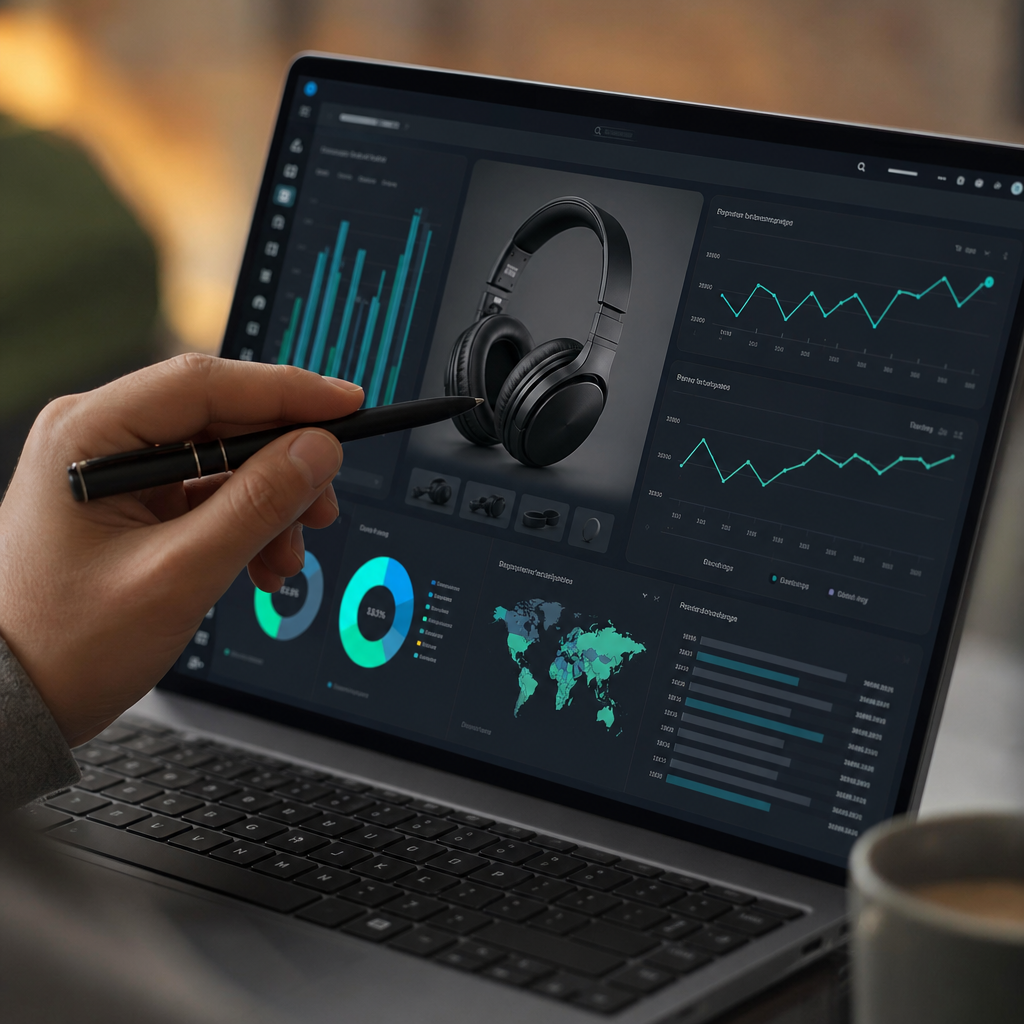
Not all data points carry equal weight. A few signals tend to separate products that scale from products that fizzle after the first week:
- Sustained ad spend, not spikes. A product with steady ad activity over 3 to 4 weeks is more reliable than one with a single viral spike.
- Multiple advertisers, same product. If several unrelated stores are running ads for the same item, that points to real market demand rather than one lucky creator.
- Problem-solution clarity. Products that solve an obvious, nameable problem tend to convert better than pure novelty items.
- Margin headroom. A product needs enough margin to survive testing costs. Tools that only show retail price without supplier cost are giving you half the picture.
- Shippability. Lightweight, non-fragile products reduce returns and shipping delays, both of which hurt long-term store health.
AI tools are increasingly good at surfacing the first two signals automatically. The last three still need a human judgment call, which is why no tool should fully replace manual review.
AI Tools vs. Manual Research: A Direct Comparison
It's worth being honest about where AI tools help and where they don't. Manual research is slower, but it still has advantages software hasn't fully replicated.
| Factor | AI Product Research Tool | Manual Research |
|---|---|---|
| Speed | Minutes to scan thousands of listings | Hours per day, limited by human attention |
| Pattern detection | Strong across large datasets | Weak beyond a handful of data points |
| Contextual judgment | Limited, improving | Strong, understands cultural nuance |
| Cost | Monthly subscription | Free, but costs time |
| Risk of false positives | Moderate (trending isn't the same as profitable) | Lower, if the researcher is experienced |
| Scalability | High | Low |
The practical takeaway: use AI tools to build the shortlist, then apply human judgment to make the final call. Treating AI output as gospel is one of the mistakes I cover in The Biggest Mistakes Sellers Make When Deploying AI Agents for E-Commerce. Automation should narrow the funnel, not replace the decision.
Beyond Product Discovery: Where AI Fits in the Broader Store Workflow
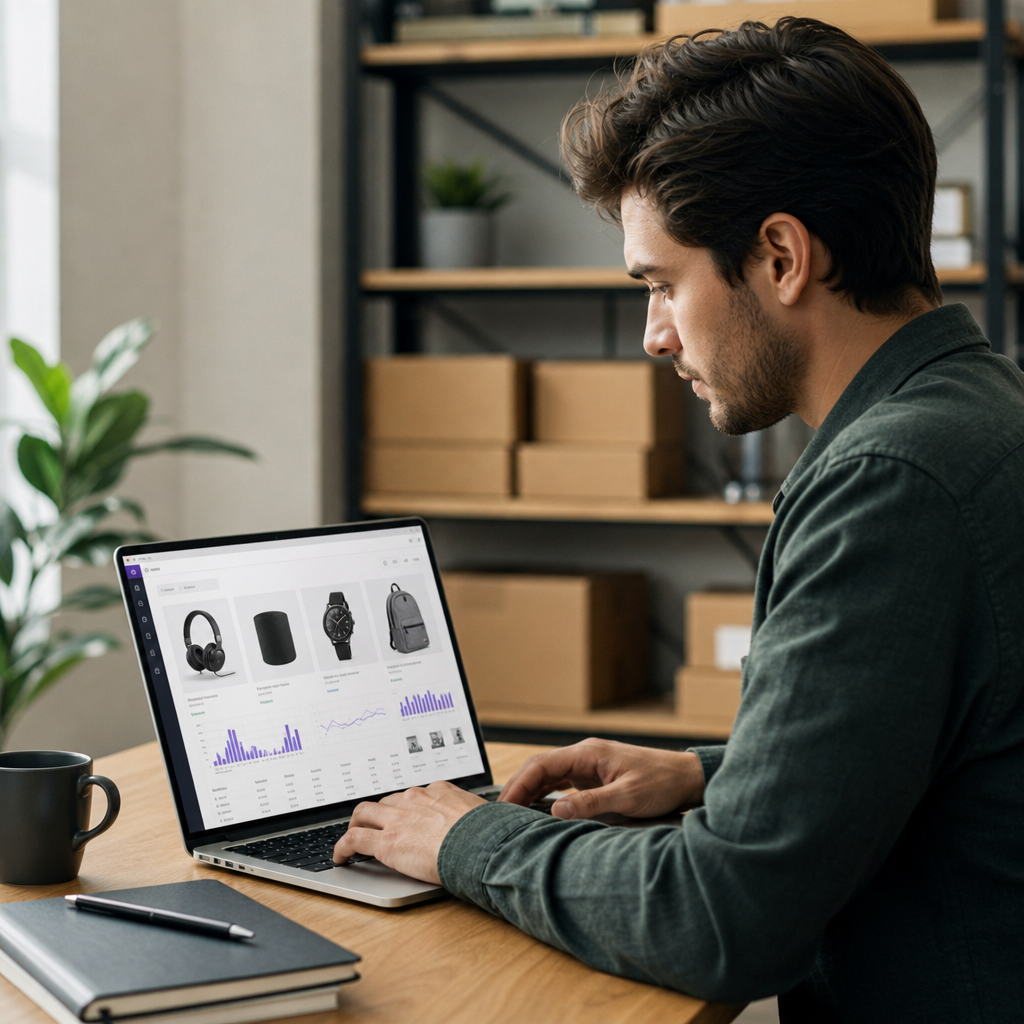
Product research is only the first link in the chain. Once a product is validated, AI tools increasingly help with:
- Store building: AI page builders that generate product descriptions, FAQs, and basic layouts from a single product URL.
- Creative production: AI video and image tools that turn a supplier's product photos into scroll-stopping ad creative.
- Customer support: AI chat agents that handle pre-sale questions and basic order status questions, which lightens the load on solo operators.
- Financial tracking: automated dashboards that calculate true margin after ad spend, platform fees, and shipping costs.
Budget discipline belongs in this chain too. Even a great product can be undone by loose spending during testing, so set a test budget before launch and track it against true margin, not just revenue.
Common Mistakes When Relying on AI for Product Research
AI tools remove grunt work, but they also introduce new failure modes if used carelessly. The most frequent mistakes include:
- Chasing every trending alert. Not every flagged product fits your store's niche or audience. Relevance still matters more than raw trend score.
- Ignoring supplier reliability. A hot product from a supplier with a two-week shipping time will hurt your conversion rate regardless of demand.
- Over-trusting AI-generated ad copy. Generated copy is a starting point, not a finished asset. It still needs a human edit for tone and compliance.
- Skipping competitor saturation checks. A product that has been trending for six months is likely already saturated. Tools that only show whether something is trending, not for how long, can mislead you.
- Treating tools as a subscription stack instead of a workflow. Paying for five overlapping tools without a process to use them consistently wastes money and adds noise.
These mistakes are avoidable with a disciplined process, which is why I'd rather build the workflow first and pick tools to fit it, not the other way around.
How to Choose the Right Tool for Your Stage
Not every seller needs the same tool. Your stage of business should drive the decision more than feature count.
- Brand new sellers should start with a lower-cost, all-in-one dashboard to build pattern recognition without overspending before the first sale.
- Sellers already running paid ads get more out of ad intelligence tools, since creative and audience insight matters more than raw product discovery at this stage.
- Sellers scaling toward $10K months typically need a combination: one tool for discovery, one for competitor ad tracking, and a separate dashboard for margin tracking across multiple SKUs.
It's also worth revisiting your tool stack every quarter. Pricing, data sources, and AI features change fast in this space, and a tool that was the best option a year ago may have been overtaken by one with better data coverage.
Setting Realistic Expectations
It's tempting to believe an AI product research tool guarantees a winning product. It doesn't. What it reliably delivers is a faster, more data-informed shortlist, which cuts search time and reduces the number of blind guesses in your testing budget. The final decision, the creative, and the follow-through still rest on the seller.
Global e-commerce keeps growing, which means more competition entering the same product categories. Tools that help you spot demand earlier, before a product fully saturates, are becoming less of a luxury and more of a baseline for anyone serious about dropshipping in 2026. Speed to validation is now as much of an edge as ad budget. If you sell on Shopify, Shopify's blog is a reasonable place to keep up with commerce trends.
Final Thoughts
An AI product research tool won't replace judgment, supplier vetting, or a solid offer. It will compress the time it takes to find products worth testing, and it will surface patterns a human researcher would likely miss. Used as part of a structured weekly workflow, paired with honest supplier checks and sound budget discipline, these tools are one of the most useful additions to a modern dropshipping operation.
If you want workflows rather than another list of tool names, my other articles cover product sourcing, store building, and scaling a lean e-commerce business. For the sourcing side specifically, start with How to Use AI Product Sourcing to Find Winning Items Before Your Competitors Do.