
Running a lean e-commerce business in 2026 no longer means hiring a team of virtual assistants, designers, and customer service reps. The right stack of AI tools can take on a lot of that work. The challenge isn't finding AI tools for e-commerce, since there are hundreds of them. The challenge is knowing which ones are worth your subscription dollars and which ones are repackaged hype.
This article breaks down the best AI tools for e-commerce across the five areas that matter most: product sourcing, store building, content and creative, customer support, and operations. I run my own businesses on AI agents, and the same test applies here as everywhere else: a tool earns its spot by saving real time on a real task. If you want to see how these pieces fit together in one setup, I cover that in The AI Tool Stack I Use to Run a Lean Store.
Why AI Tools Matter More Than Ever for Lean E-Commerce
The dropshipping and e-commerce landscape has changed a lot since the days of manual product research and spreadsheet-based supplier tracking. Margins are tighter, ad costs on platforms like Meta and TikTok have climbed, and customers expect faster responses and better content. AI tools help lean operators compete with better-funded competitors by compressing the time it takes to do research, write copy, generate creative, and handle support tickets.
The gains show up when AI is built into core workflows, not used as a novelty. For solo operators and small teams, that difference often decides whether a store stays a side hustle or becomes a real business.
The key is treating AI as infrastructure, not magic. These tools don't find winning products or write perfect ad copy on their own. They speed up the decisions you're already making with better data and faster iteration.
Best AI Tools for Product Sourcing and Research
Finding winning products is still the first bottleneck for most new sellers. AI-powered research tools now pull trend data, analyze engagement signals, and help you spot demand before a product peaks.
Top picks for sourcing:
- Sell The Trend: Combines trend tracking with AI scoring to flag products gaining traction across TikTok, Facebook, and Amazon.
- Minea: Strong for ad-spy research. Its filters surface ads with rising engagement before they go mainstream.
- EcomHunt: Good for beginners who want curated picks plus reasoning on why a product might work.
- ChatGPT with custom GPTs: Useful for synthesizing supplier data, writing sourcing briefs, and comparing niches quickly when paired with real market data.
| Tool | Best For | Pricing | AI Feature |
|---|---|---|---|
| Sell The Trend | Trend-spotting across platforms | Paid monthly plans | Cross-platform demand scoring |
| Minea | Ad research and spy tools | Paid monthly plans | Engagement-based ad filtering |
| EcomHunt | Beginner-friendly curated lists | Paid monthly plans | Curated product analysis |
| ChatGPT (Plus) | Research synthesis, niche analysis | $20/mo | Natural language data synthesis |
Pricing on research tools changes often, so check the current plans before you commit. For the full process of validating a product before you spend on ads, see How to Use AI Product Sourcing to Find Winning Items Before Your Competitors Do.
Best AI Tools for Building and Optimizing Your Store
Once you've validated a product, the store itself needs to convert. AI has made real progress in theme generation, copywriting, and layout work, areas that used to require a freelancer or weeks of A/B testing.
- Shopify Magic: Built directly into Shopify, it generates product descriptions, email copy, and basic image edits with no extra app to install.
- Vitals: An all-in-one Shopify app suite covering upsells, reviews, and trust badges, with AI-assisted features in parts of it.
- Replo: An AI-assisted landing page builder, so you aren't starting every product page from a blank canvas.
- Durable: Useful for quickly spinning up a basic storefront or landing page skeleton with AI, especially when you're testing a new niche.
Why this matters: Store conversion rate is one of the most overlooked levers in e-commerce. Small conversion gains apply to every dollar of ad spend you push to the page, and AI copywriting and layout tools let you test changes faster than doing everything by hand.
| Platform | Primary Use | Free Tier? | Notable AI Feature |
|---|---|---|---|
| Shopify Magic | Store copy and emails | Yes (included with Shopify) | Native AI content generation |
| Vitals | Upsells, reviews, trust badges | No (bundled with Vitals) | AI-assisted review tools |
| Replo | Landing pages | Limited | AI layout generation |
| Durable | Fast storefront creation | Trial | Full AI site generation |
For a closer look at how AI-built stores compare to manually built ones, see AI Dropshipping Store vs. Traditional Dropshipping: Which Model Actually Wins in 2026?
Best AI Tools for Content, Creative, and Ad Copy
Creative fatigue is one of the fastest ways to kill ad performance. AI content tools have become essential for producing volume without giving up quality, especially for small teams that can't brief a design agency every week.
Key tools worth using:
- Midjourney: One of the strongest options for polished product lifestyle imagery when you don't have budget for a photoshoot.
- Canva Magic Studio: AI design suggestions, background removal, and quick video ad assembly, ideal for non-designers.
- Jasper: Strong for scaling ad copy variations and keeping brand voice consistent across campaigns.
- Descript: AI-based video editing that makes UGC-style ad editing fast, including auto-captioning and filler-word removal.
- ElevenLabs: For voiceovers on product videos when you don't want to record audio yourself.
The time these tools save is worth the most when it goes back into strategy and testing rather than more production. One caution: AI lifestyle images still need to show the real product accurately. Ads that misrepresent what ships lead to refunds and can run into the FTC's advertising rules.
Best AI Tools for Customer Support and Retention
Customer support quietly eats more founder time than almost anything else in early-stage e-commerce. AI chat and support tools have matured enough to handle many routine tickets without frustrating customers.
Recommended tools:
- Gorgias AI Agent: Built for Shopify stores, it handles common order-status and return questions automatically while escalating complex issues.
- Tidio: An affordable AI chatbot with e-commerce templates, good for small stores just starting with automated support.
- Klaviyo AI: Klaviyo is mainly an email and SMS platform, and its AI segmentation and send-time features help with retention.
| Tool | Function | Pricing Model | Best Fit |
|---|---|---|---|
| Gorgias AI Agent | Automated ticket resolution | Usage-based | Growing Shopify stores |
| Tidio | Live chat + chatbot | Free tier + paid plans | New or small stores |
| Klaviyo AI | Email/SMS retention | Based on contact volume | Stores focused on repeat revenue |
Support automation isn't just about saving time. It's about consistency. Fast, reliable answers to "where is my order" go a long way toward whether a customer buys again, which makes AI-assisted support a retention tool as much as a convenience.
Best AI Tools for Operations, Analytics, and Scaling
Scaling past the first few thousand dollars in monthly revenue usually exposes weak spots in operations: inventory tracking, margin analysis, and ad spend allocation. This is where AI-driven analytics tools earn their keep.
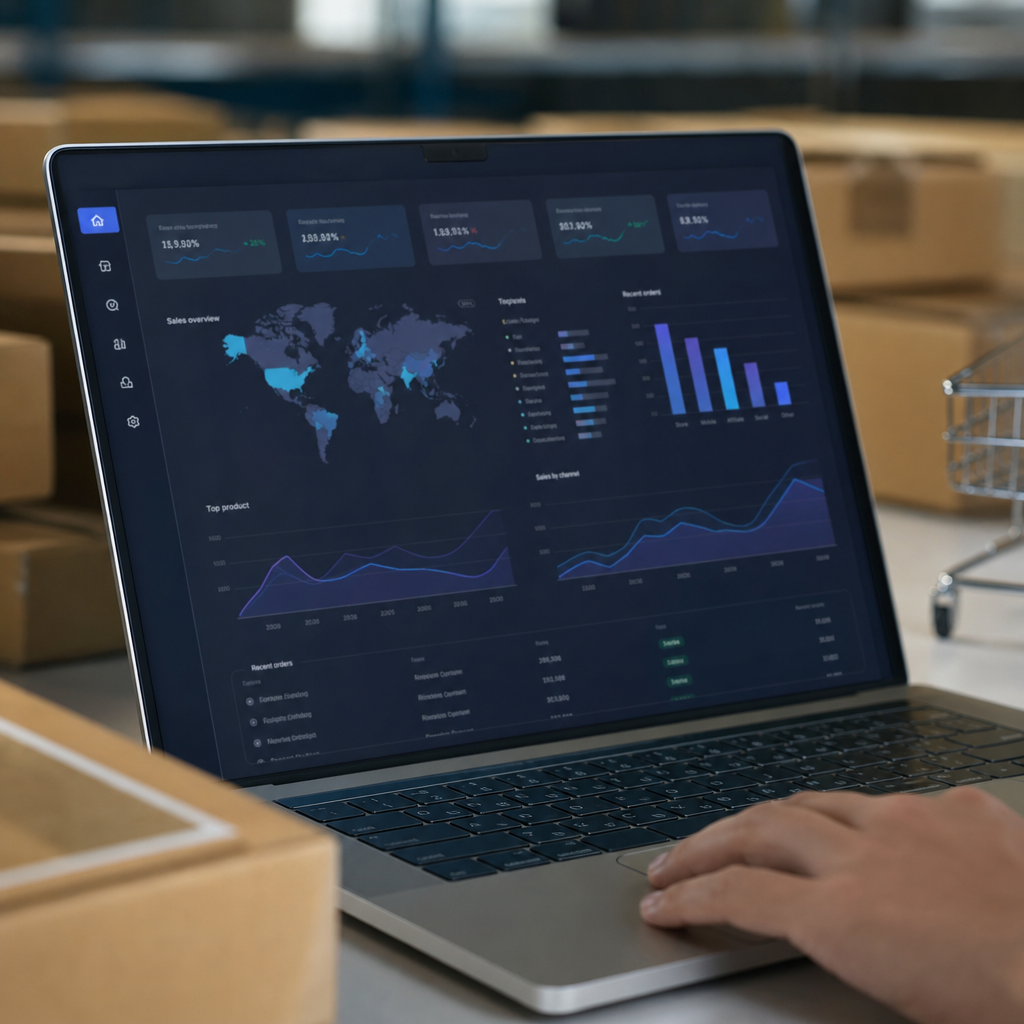
- Triple Whale: Pulls ad spend, revenue, and margin data into one dashboard with AI summaries, useful for daily decisions without building reports by hand.
- Northbeam: Attribution modeling that helps you credit which channels actually drive conversions, especially once you're running ads on several platforms.
- Inventory Planner: Demand forecasting to avoid stockouts or overordering, which matters more as order volume grows.
- ChatGPT or Claude for financial modeling: Many operators now use large language models to build quick margin calculators, break-even analyses, and scenario plans instead of complex spreadsheets from scratch.
Native platform reports are a fine place to start. Once you're spending across several channels, though, one view of revenue, ad spend, and margin by product makes it much easier to catch an underperforming SKU or channel before it eats your profit.
For how these tools fit into the climb toward your first big month, see From First Sale to First $10K Month.
How to Choose the Right AI Tools for Your Stage
Not every tool belongs in every store's stack. Buying the "best" tools for a business doing $500 a month often wastes money on features you can't use yet. Matching what you spend on tools to your stage keeps you from both underinvesting and overspending.
A practical framework:
- Pre-launch / validation stage: Prioritize sourcing and research tools (Minea, EcomHunt, ChatGPT) over paid analytics suites. You don't need Triple Whale before you have meaningful ad spend.
- $0 to $3K/month: Focus on store conversion tools (Shopify Magic, Replo) and basic support automation (Tidio) to protect your time.
- $3K to $10K/month: Bring in attribution and analytics tools (Northbeam, Triple Whale), since ad spend is now high enough that attribution errors cost real money.
- $10K+/month: Layer in forecasting and inventory tools, plus more advanced retention systems, since operational complexity grows faster than revenue at this stage.

Buying tools before you have a clear use for them is one of the most common ways small businesses get poor returns from AI. Start with the problem, then pick the tool.
Common Mistakes When Adopting AI Tools for E-Commerce
Even good tools produce bad outcomes when used poorly. A few patterns show up again and again among sellers who struggle to get value from their AI stack:
- Treating AI output as final, not a draft. AI-generated product descriptions and ad copy almost always need human editing for brand voice and accuracy.
- Stacking too many tools at once. Running five overlapping analytics tools creates more confusion than clarity. Pick one source of truth.
- Ignoring data quality. AI forecasting tools are only as good as the sales data feeding them. Garbage in, garbage out still applies in 2026.
- Automating support too aggressively. Full automation without clear escalation paths frustrates customers with genuine issues. Keep a human in the loop for edge cases.
- Skipping validation before scaling creative spend. AI can generate endless ad variations, but without a validated offer, more creative volume just burns budget faster.
Avoiding these mistakes is usually worth more than finding one more "secret" tool. The sellers who do well with AI tend to use fewer tools, applied more deliberately, rather than chasing every new release.
Final Thoughts on Building a Lean AI-Powered E-Commerce Stack
The best AI tools for e-commerce in 2026 aren't the flashiest ones. They're the ones that fit cleanly into a workflow you'll actually stick with. Sourcing tools like Minea and Sell The Trend save research time. Store builders like Shopify Magic and Replo help close the gap between a mediocre page and a high-converting one. Creative tools like Midjourney and Descript let small teams produce content at a volume that used to take an agency. Support and analytics tools protect the two things that matter most as you scale: customer trust and margin visibility.
None of these tools replace strategy. They speed up a strategy that's already sound. If you're building a lean, AI-assisted store, the rest of my articles cover sourcing, store building, and scaling in more depth.