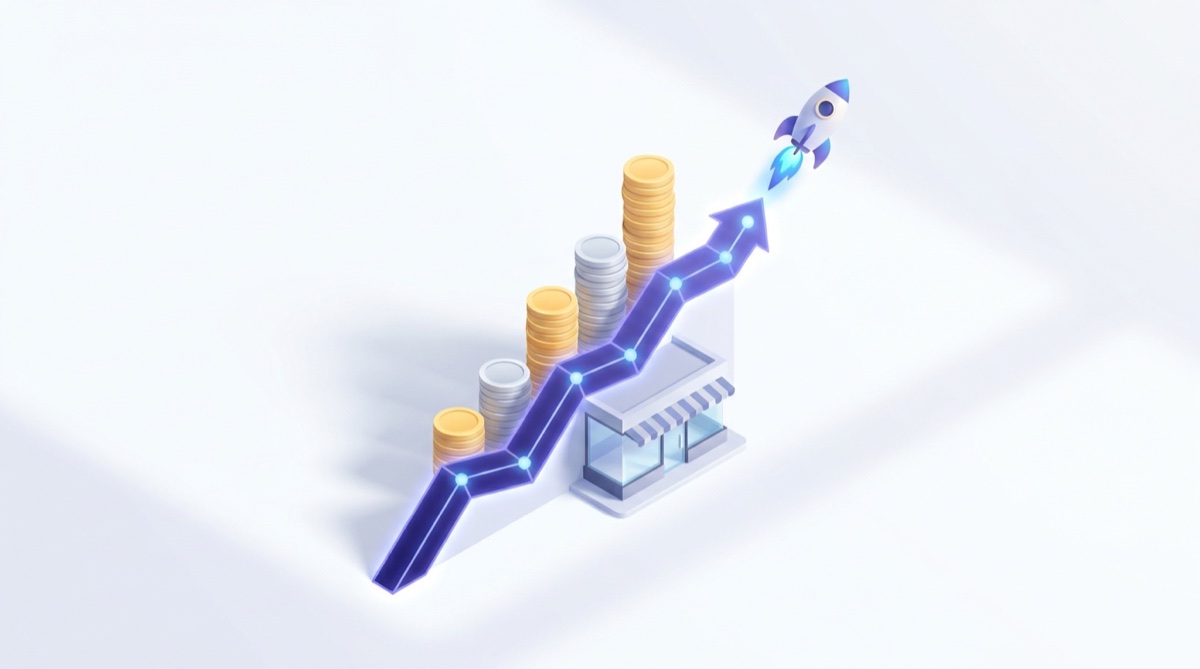
The first sale feels like magic. A stranger on the internet gave you money for something you put together. Then reality sets in: one sale isn't a business, and the path from there to a real, repeatable $10K month is less about a secret growth hack than about which bottleneck you're willing to fix next.
I want to walk through what actually changes across that journey — because the thing that gets you your first sale is almost never the thing that gets you to ten grand a month. The game changes underneath you, and knowing that in advance saves you from spinning on the wrong problem.
Stage 1: First sale — proving demand
At the very start, you have exactly one job: prove a real person will pay. Not your friends, not out of pity — a stranger, at your price, for your reasons. Everything else is a distraction. Don't automate, don't optimize, don't build systems yet. You have nothing to systematize.
Before you have a proven offer, automation just helps you scale zero. And zero scaled is still zero.
The mistake here is polishing. People rebuild the logo for the third time instead of putting the product in front of traffic. Get it in front of people. Let the market answer the only question that matters.
Stage 2: First ten sales — finding the pattern
Now you're hunting for the pattern. Where did those buyers come from? What did they say? Which product, which angle, which channel? Ten sales is enough to start seeing a shape — usually one product and one channel doing most of the work.
This is where AI starts earning its place: reading your early customer messages and reviews for themes, tightening the listing that's converting, drafting the support replies you're now writing over and over. You're not scaling yet — you're removing the friction that's about to multiply.
Stage 3: First $1K month — the bottleneck moves
Around your first consistent thousand, the bottleneck almost always moves from "can I make a sale?" to "can I keep up?" Support tickets pile up. Fulfillment questions appear. You feel the pull to spend your whole day reacting.
This is the moment to build the boring infrastructure: AI handling tier-one support, a clean order-to-supplier flow you've tested yourself, the email basics firing automatically. Not because it's exciting — because if you don't, growth becomes the thing that buries you.
Stage 4: $1K to $10K — leverage, not effort
Here's the shift almost nobody tells you: the jump from $1K to $10K is not ten times the effort. If it is, you've built a job, not a business. It should be the same core system, pointed at more traffic, with the repetitive work handled so you can spend your hours on the few things that actually move revenue:
- Traffic that compounds — the channel that's working, pushed harder, plus one new angle at a time.
- Better offers — bundles, a second product your buyers already want, reasons to spend more per order.
- Retention — the cheapest growth there is. A buyer who comes back is worth more than a new one you had to pay to acquire.
Notice what's not on that list: reinventing your whole store, chasing a brand-new niche, adding five tools. Scaling is mostly subtraction — cutting what doesn't work and pouring fuel on the one or two things that do.
The honest part
$10K months are very reachable for one focused person with AI doing the heavy lifting. But they come from stacking un-sexy decisions: prove demand, find the pattern, remove the friction, then feed the winner. Every stage has a different bottleneck, and your only real job is to keep honestly asking, "what's the one thing holding this back right now?" — and fixing that, not the thing that's more fun to fix.
Do that on repeat and the number takes care of itself. The people who get stuck aren't the ones without a hack — they're the ones fixing the wrong bottleneck.