
Starting a dropshipping business used to mean weeks of manual product research, spreadsheets full of supplier contacts, and guesswork on what might sell. In 2026, that's no longer how the most efficient sellers operate. AI tools now handle product discovery, store copywriting, customer service, and ad optimization in a fraction of the time it used to take, if you know how to use them correctly.
This guide walks through exactly how to start dropshipping with AI, step by step, using the same practical workflows I cover across the articles on this site. No hype and no push-button riches promises. Just a realistic process for building a lean, AI-assisted store from scratch.
Why AI Changes the Dropshipping Equation
Traditional dropshipping success depended heavily on how much manual research time you could put in. Finding winning products meant scrolling through hundreds of listings, checking competitor ads, and guessing at demand. AI tools compress that process dramatically by analyzing trend data, scanning competitor stores, and spotting patterns humans would take hours to find.
That doesn't mean AI does the business for you. It means the bottleneck shifts from "who can grind the longest" to "who can build the smartest workflow." Shopify's own writing on commerce trends treats automation and AI-assisted tooling as part of the standard toolkit for new sellers, not an optional extra.
Here's what AI realistically changes for a new dropshipper:
- Faster product validation: AI tools can cross-reference trend data, ad libraries, and sales estimates in minutes.
- Lower content costs: product descriptions, ad copy, and email sequences can be drafted instantly and refined by a human.
- Smarter customer support: chatbots handle a large share of repetitive inquiries, freeing you to focus on strategy.
- Better margin visibility: AI-powered spreadsheets and apps can flag pricing and shipping cost issues before they eat your profit.
Step 1: Choose Your Niche Using AI-Assisted Research
Before touching a store builder, you need a niche. AI tools make this step faster, but the thinking is still yours to do. Start by feeding a large language model prompts about audience pain points, then cross-check the output against real data sources like Google Trends and marketplace bestseller lists.
A practical workflow looks like this:
- Ask an AI model to generate 20 niche ideas based on criteria you set (price point, shipping weight, repeat purchase potential).
- Cross-reference each idea against Google Trends for seasonality and growth patterns.
- Use an AI-powered ad spy tool to see which niches already have active, scaling competitors. That's a sign of real demand.
- Narrow to 2-3 niches and validate manually by checking supplier availability and pricing.
This hybrid approach, AI for speed and human judgment for filtering, is the same method I walk through in How to Use AI Product Sourcing to Find Winning Items Before Your Competitors Do.
Step 2: Source Products With AI-Powered Tools
Once you've picked a niche, sourcing is where AI tools save the most time. Instead of manually browsing supplier catalogs, AI-driven sourcing platforms can scan thousands of listings, flag items with strong margins, and even predict demand trends based on social signals.
Popular categories of AI sourcing tools include:
- Trend-detection platforms that scan TikTok, Instagram, and ad libraries for emerging products.
- Supplier-matching tools that connect you to vetted manufacturers with better lead times than generic directories.
- Margin calculators that factor in shipping, platform fees, and currency conversion automatically.
| Sourcing Method | Speed | Data Depth | Best For |
|---|---|---|---|
| Manual marketplace browsing | Slow | Low | Beginners learning the market |
| AI trend-scanning tools | Fast | High | Spotting early winners |
| AI-assisted supplier platforms | Medium | Medium-High | Long-term product relationships |
| Hybrid (AI + manual vetting) | Medium | Highest | Most sellers, long term |
Avoid the trap of trusting AI output blindly. If a tool flags a product as "trending," verify it against real sales data or competitor ad spend before committing inventory decisions or marketing budget.
Step 3: Build Your Store With AI-Generated Content
Once you have validated products, it's time to build the actual storefront. This is where AI tools shine for content generation. Product descriptions, FAQ sections, size guides, and even basic page layouts can all be drafted by AI and refined by you.
A streamlined build process:
- Platform setup: Shopify remains the dominant platform for AI-assisted dropshipping because of its wide app ecosystem. Compare it against alternatives like WooCommerce if you want more control over hosting costs.
- Theme selection: Choose a lightweight, mobile-optimized theme. Page speed affects both conversion rate and SEO.
- AI copywriting: Use a language model to draft product descriptions, then edit for brand voice and accuracy. Never publish AI copy without a human review pass. Factual errors in product claims can create legal and trust issues.
- Visual assets: AI image tools can clean up supplier photos, remove backgrounds, and generate lifestyle mockups without a photographer.
If you're fitting this around a full schedule, I cover how to pace the build in For Busy First-Time Founders: How to Build an Online Store With AI Without Burning Out.
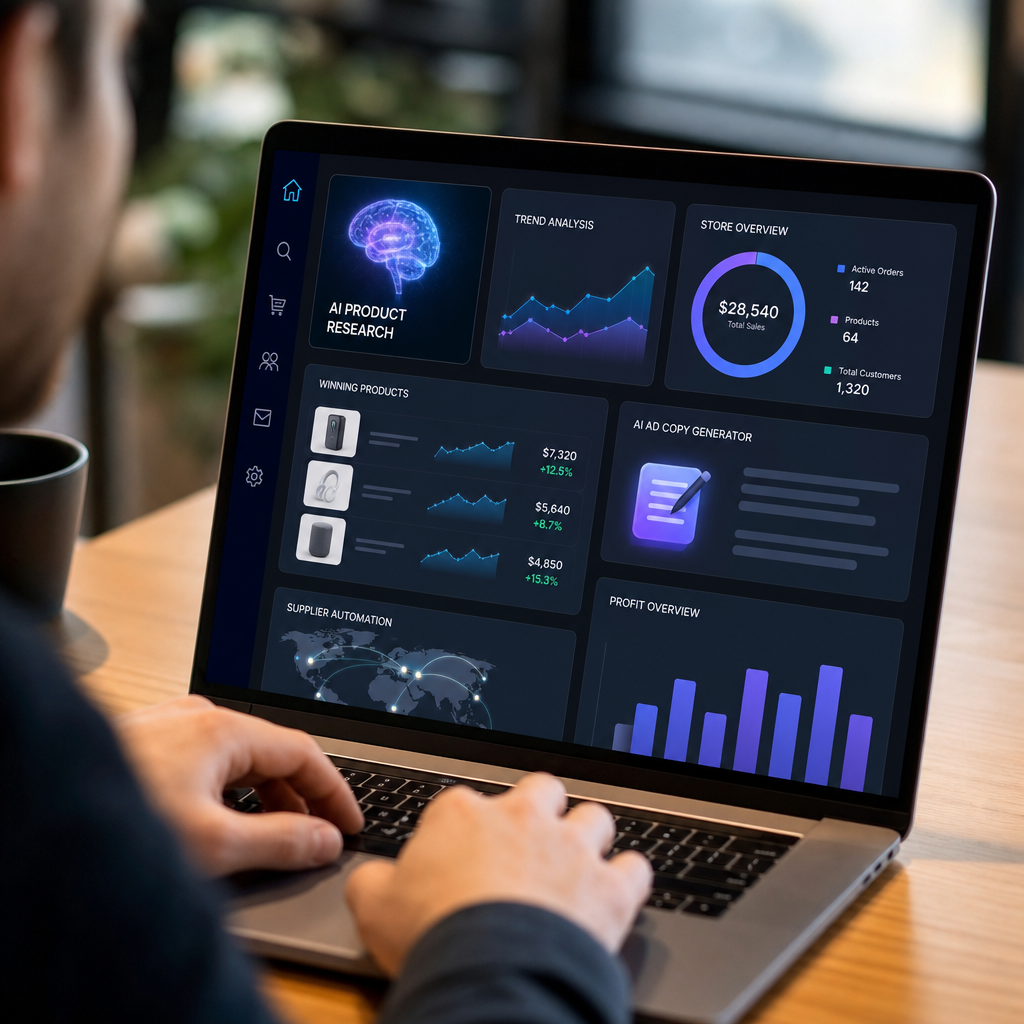
Step 4: Automate Operations and Customer Support
This is the stage where AI delivers the clearest return on time invested. Once your store is live, a surprising share of your day will go to repetitive tasks: answering the same shipping questions, processing returns, and following up on abandoned carts. AI automation tools can absorb most of this.
Common automation layers for a lean AI-powered store:
- Chatbots for first-line customer support, trained on your FAQ and policies.
- Email/SMS automation for abandoned cart recovery and post-purchase upsells.
- Inventory syncing tools that alert you when a supplier runs low, preventing overselling.
- Review and UGC collection tools that automatically request and organize customer feedback.
One area many new sellers overlook is personal sustainability. Running a one-person e-commerce operation can quickly lead to burnout if every task is manual. Protect your own routine as deliberately as you protect your store's, because consistency and clear-headed decisions directly affect how well you manage your AI tools and respond to customer issues.
| Task | Where the Time Goes Manually | What AI Takes Over |
|---|---|---|
| Customer support replies | Answering the same shipping and sizing questions | First-line replies drawn from your FAQ and policies |
| Product description writing | Drafting every page from scratch | First drafts you edit for accuracy and voice |
| Ad copy variations | Writing each headline and hook by hand | Batches of variations ready to test |
| Order/inventory tracking | Checking supplier stock and order status | Alerts when stock runs low or orders stall |
| Review requests & follow-up | Emailing customers one by one | Automated requests after delivery |
The details vary by store size, but the general pattern holds: automation doesn't eliminate your workweek, it reallocates it toward strategy and growth decisions.
Step 5: Use AI for Marketing and Ad Optimization
Marketing is often where new dropshippers lose money fastest, and it's also where AI can either save you or mislead you if used carelessly. AI-powered ad platforms can optimize bidding and creative testing far faster than manual management, but they still need a human setting guardrails on budget and target audience.
Practical ways to apply AI in marketing:
- Ad creative generation: use AI tools to produce multiple ad variations quickly, then let the ad platform's algorithm test them.
- Audience research: AI tools can analyze competitor audiences and suggest lookalike targeting parameters.
- Copy testing: generate multiple headline and CTA variations for A/B testing instead of relying on one guess.
- Performance analysis: use AI dashboards to flag underperforming campaigns before they drain your budget.
Major ad platforms like Meta already bake machine learning into targeting and budget allocation, which means even "manual" ad management today involves AI under the hood. The skill isn't avoiding AI in marketing. It's understanding what it optimizes for and setting the right constraints.
Step 6: Track Metrics and Avoid Common AI Pitfalls
AI tools are only as useful as the data and judgment behind them. Several recurring mistakes show up across new AI-assisted dropshipping stores:
- Over-trusting trend predictions without verifying real demand data.
- Publishing AI-generated content unedited, leading to inconsistent brand voice or factual errors.
- Automating customer support too aggressively, frustrating customers who need a human response for complex issues.
- Ignoring unit economics because an AI tool flagged a product as "hot" without checking true margins after fees and shipping.
A healthy AI dropshipping operation tracks core metrics weekly, regardless of which tools are generating the underlying data:
| Metric | Why It Matters | What to Watch Early |
|---|---|---|
| Conversion rate | Shows store/offer effectiveness | Whether page and offer changes move it week over week |
| Customer acquisition cost (CAC) | Determines ad sustainability | Whether it stays comfortably below your profit per order |
| Average order value (AOV) | Impacts overall profitability | Niche-dependent; watch whether bundles and upsells lift it |
| Return/refund rate | Signals product-market fit issues | Spikes tied to a specific product or supplier |
| Repeat purchase rate | Indicates brand loyalty potential | Steady repeat buyers are a strong early signal |
For what comes after the early stage, once these metrics stabilize, I break down the next phase in What Does It Actually Take to Scale a Dropshipping Store to $10K a Month?

Step 7: Scale Gradually With AI-Assisted Decision Making
Once your store has validated product-market fit and stable metrics, scaling becomes about expanding what already works rather than chasing every new trend. AI tools are particularly useful here for forecasting inventory needs, testing new audience segments, and identifying adjacent products to expand your catalog.
A sustainable scaling approach:
- Reinvest profit methodically: increase ad spend only after CAC and margins are proven stable over several weeks.
- Expand product lines using AI sourcing data, prioritizing items with proven demand adjacency to your bestsellers.
- Layer in retention tools: loyalty programs, email segmentation, and personalized recommendations compound revenue without new ad spend.
- Delegate repetitive tasks further: as revenue grows, combine AI tools with part-time virtual assistants for tasks requiring judgment AI can't fully replicate.
Scaling too fast on unverified AI signals is one of the most common ways new stores burn through cash. Growth built on verified, repeatable numbers holds up better than growth built on speculation. If you want grounding in cash flow and planning as you grow, the U.S. Small Business Administration's guide to managing your business is a solid, neutral starting point.
Building a Realistic AI Dropshipping Toolkit
To summarize the workflow into something actionable, here's a simplified toolkit stack that reflects what most lean, AI-assisted stores actually use day to day:
- Research: AI trend-analysis tools + Google Trends
- Sourcing: AI supplier-matching platforms + manual vetting
- Store build: Shopify or WooCommerce + AI copywriting assistant
- Support: AI chatbot + human escalation path
- Marketing: AI ad creative tools + platform-native optimization (Meta/Google)
- Analytics: Centralized dashboard tracking the five core metrics above
None of these tools replace strategic thinking. They compress the time it takes to execute on decisions you still need to make deliberately: which niche to pursue, which products deserve your marketing budget, and when to scale versus hold steady. For the specific tools I use and how they fit together, see The AI Tool Stack I Use to Run a Lean Store.
Final Thoughts
Learning how to start dropshipping with AI isn't about finding a single magic tool. It's about building a workflow where AI handles repetitive, data-heavy tasks while you focus on strategy, quality control, and customer trust. The sellers who do well in 2026 treat AI as a way to move faster, not a replacement for sound business judgment.
If you want to go deeper on any of these steps, from product sourcing to scaling, the rest of my articles break each one down. I've been a software engineer for more than 10 years and I run my own businesses on AI agents, so I write about these workflows the way I'd want them explained to me: what works, what doesn't, and no hype.