
Hitting $10,000 a month in dropshipping revenue sounds like a milestone reserved for a lucky few, but it's mostly a function of process. Most stores that stall out at $1,000 or $2,000 a month aren't failing because of bad luck. They're failing because they never built the systems that let revenue compound. This article breaks down the levers you need to pull, in the order that actually matters, to scale a dropshipping store to $10K a month in 2026.
I've covered the sourcing and tooling side in other articles, including How I Use AI Agents to Find Winning Products and The AI Tool Stack I Use to Run a Lean Store. This piece zooms out and focuses on the scaling phase: what happens after you've validated a product and need to turn a few hundred dollars a month into five figures.
Why Most Stores Plateau Before $10K
Before talking about scaling, it's worth understanding why so many stores stop growing. Running short on capital and managing cash flow poorly are among the most common reasons small businesses stall in their early stage, and dropshipping stores are no exception. The plateau usually comes down to one or more of these issues:
- Single product dependency: the entire store relies on one SKU, with no backup if ad costs rise or the product trends down.
- No reinvestment discipline: profits get pulled out instead of going back into testing and inventory buffers.
- Manual bottlenecks: the founder is doing fulfillment, customer service, and ad management alone, which caps how much volume the store can handle.
- Weak retention systems: every sale comes from a new customer because there's no email, SMS, or loyalty flow bringing people back.
Scaling to $10K a month means removing each of these constraints on purpose, not just spending more on ads and hoping.
Step 1: Nail Product-Market Fit Before You Scale Spend
Scaling ad spend on an unproven product is the fastest way to burn cash. Before increasing budgets, you want clear signals that the product has real demand:
- A conversion rate of roughly 1.5 to 2% or better from cold traffic
- Positive return on ad spend (ROAS) sustained over at least 3 to 5 days, not a single lucky session
- Organic interest signals: search volume, TikTok or Instagram engagement, or repeat traffic from content
Search trend data and the ad libraries on the major social platforms are useful for checking demand before you commit serious budget. If you're still in the sourcing phase, I walk through AI-assisted product research in How to Use AI Product Sourcing to Find Winning Items Before Your Competitors Do, including how AI agents can shorten the research itself.
Step 2: Build a Scaling-Ready Store Infrastructure
A store that can handle $10K a month needs infrastructure that a $500-a-month hobby store doesn't. That includes reliable suppliers with reasonable shipping times, a theme that loads fast on mobile, and automated systems for order tracking and customer updates.
Here's a quick comparison of what separates a store stuck at low four figures from one ready to scale:
| Factor | $1K–$2K/Month Store | $10K/Month-Ready Store |
|---|---|---|
| Supplier relationships | Single marketplace supplier | 2-3 vetted suppliers, backup sourcing |
| Shipping times | 15-30 days | 5-12 days (domestic or regional warehousing) |
| Customer support | Manual email replies | Automated FAQs + help desk software |
| Product catalog | 1-2 products | 3-5 proven products with an upsell path |
| Analytics | Platform defaults only | UTM tracking, pixel health checks, dashboards |
| Reinvestment rate | 0-20% of profit | 50-70% of profit reinvested |
This kind of infrastructure doesn't need to be expensive, but it does need to be intentional. Moving routine support questions into a help desk with automated FAQ answers is one of the first places you'll get hours back once order volume increases.
Step 3: Use AI Tools to Remove Manual Bottlenecks
This is where most of the leverage comes from in 2026. AI tools have matured to the point where a solo operator can realistically run operations that used to need a small team. A few categories worth focusing on:
- Product research agents that scan supplier marketplaces and social platforms for trending items
- AI copywriting tools for product descriptions, ad copy variations, and email sequences
- Customer service chatbots trained on your FAQ and order data to handle tier-1 support
- Creative generation tools for producing ad variations quickly without hiring a videographer
As your stack grows, keep a simple running list of every recurring cost: ad tools, apps, and supplier software. It's easy to lose track of what's actually driving return versus what's just a monthly charge, and that matters more than people expect once you're paying for five or six tools at the same time. Review the list every month and cut anything you can't tie to revenue or time saved.
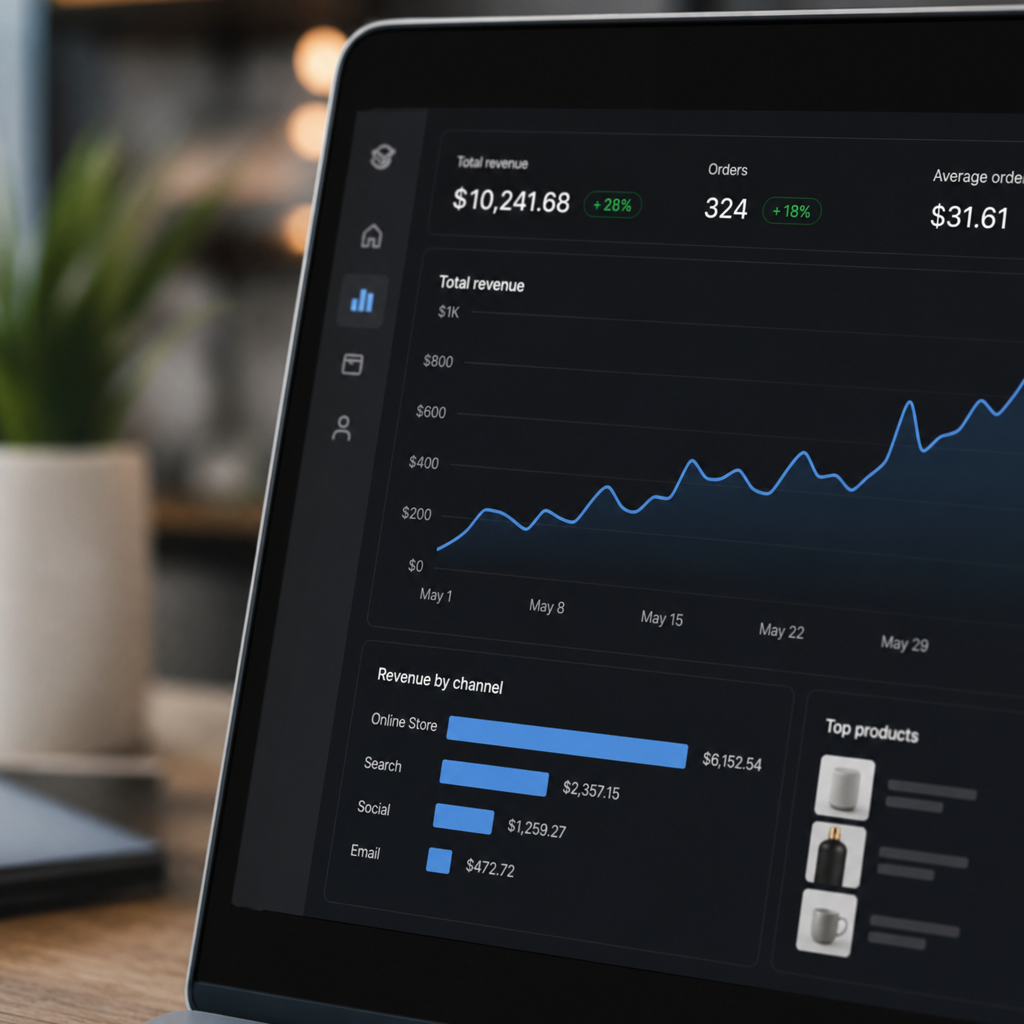
Step 4: Scale Ad Spend With a Repeatable Testing Framework
Once you have a validated product and the operational backbone to support more orders, the next lever is paid traffic. Scaling spend without a framework is how founders burn through their margin. Use a structured testing cadence instead:
- Creative testing phase: run 4-6 ad variations with a fixed daily budget (commonly $20-50 a day per ad set) for 3-4 days before judging performance.
- Horizontal scaling: once you find a winning creative, duplicate the ad set into new audiences rather than just raising the budget on the original.
- Vertical scaling: increase budget on proven ad sets by 20-30% every 2-3 days to avoid resetting the algorithm's learning phase.
- Retargeting layer: put 15-20% of total spend toward retargeting warm traffic (site visitors, cart abandoners, past purchasers).
Ad platforms generally favor gradual budget increases over large jumps, since sudden changes can disrupt delivery optimization. The same principle applies on Meta, TikTok, and Google.
| Ad Spend Stage | Monthly Spend | Expected Revenue (3x ROAS) | Focus |
|---|---|---|---|
| Testing | $500-$1,000 | $1,500-$3,000 | Finding winning creative and audience |
| Early scale | $1,500-$3,000 | $4,500-$9,000 | Horizontal scaling, retargeting setup |
| Growth | $3,500-$5,000 | $10,500-$15,000 | Vertical scaling, new product lines |
| Maturity | $5,000+ | $15,000+ | Diversified channels, retention revenue |
These numbers are illustrative and assume a healthy 3x ROAS, which is a reasonable target for a store with decent gross margins (roughly 40-60%). If your ROAS is lower, you'll need either higher margins or more volume to hit the same revenue targets.
Step 5: Diversify Beyond a Single Traffic Source
Stores that rely entirely on one ad platform are fragile. Policy changes, account bans, or rising CPMs on a single channel can wipe out months of progress overnight. To build toward a sustainable $10K a month, diversify traffic sources over time:
- Paid social (Meta, TikTok) for cold traffic acquisition
- Search ads (Google Shopping, Google Search) for high-intent buyers
- Organic content (TikTok, Instagram Reels, YouTube Shorts) to lower customer acquisition cost over time
- Email and SMS marketing for retention and repeat purchases, often the highest-margin channel once your list grows
Selling again to someone who already bought from you usually costs far less than winning a new customer, which is why retention infrastructure matters as much as acquisition once you're past the early validation stage.
Step 6: Build Retention Systems That Compound Revenue
A $10K month built entirely on cold traffic is exhausting to maintain and expensive to repeat. The stores that scale sustainably layer in retention mechanics early:
- Abandoned cart email flows that win back a share of lost carts
- Post-purchase upsell sequences that raise average order value
- SMS flash sale campaigns for re-engaging past customers
- Loyalty or subscription options for repeat-purchase products (supplements, consumables, accessories)
Well-built email and SMS flows can become a meaningful share of a store's revenue on their own. That's part of your path to $10K that doesn't require spending another dollar on ads.

Step 7: Track the Right Metrics, Not Vanity Numbers
As revenue climbs, it's easy to get distracted by top-line sales while margins quietly erode. These are the metrics that matter at the $10K-a-month stage. The benchmarks are rough rules of thumb, and your niche and margins will move them:
| Metric | Why It Matters | Rough Target |
|---|---|---|
| Net profit margin | Shows real profitability after ads, fees, COGS | 15-25% |
| Customer acquisition cost (CAC) | Determines if growth is sustainable | Below 30% of AOV |
| Customer lifetime value (LTV) | Signals retention health | LTV:CAC ratio of 3:1 or higher |
| Repeat purchase rate | Reduces reliance on paid ads | 20%+ for consumable products |
| Fulfillment time | Affects reviews and refund rates | Under 10 days |
If any of these numbers are trending the wrong way while revenue grows, you're scaling a problem, not a business.
A Realistic Timeline to $10K a Month
There's no universal timeline, but a realistic path for a store that scales often looks something like this:
- Month 1-2: Product validation, small ad budgets, store infrastructure setup
- Month 3-4: First consistently profitable ad sets, early automation of support and fulfillment
- Month 5-6: Horizontal and vertical scaling of winning campaigns, retention flows launched
- Month 7-9: Diversified traffic sources, expanded product catalog, $10K months becoming consistent rather than occasional
Some founders move faster with more capital and experience, and others take longer while learning the fundamentals. The important part isn't hitting an arbitrary deadline. It's building each layer in the right order so growth doesn't collapse the first time a platform changes its algorithm or ad costs spike.
Common Mistakes That Derail Scaling Attempts
Even founders who do everything above still stumble on avoidable mistakes:
- Scaling budget too fast, which resets ad platform learning phases and tanks performance
- Ignoring customer service as volume grows, leading to chargebacks and account flags
- Adding too many products at once, diluting ad budget and brand focus
- Underpricing to compete, which erodes the margin needed to reinvest in growth
- Neglecting mobile optimization, when most dropshipping traffic is mobile-first
Avoiding these isn't glamorous, but it's often the difference between a store that reaches $10K once and one that sustains it month after month.
Bringing It All Together
Scaling a dropshipping store to $10K a month isn't about finding one secret tactic. It's about sequencing the fundamentals correctly: validate demand, build infrastructure that can handle volume, remove manual bottlenecks with AI tools, scale ad spend methodically, diversify traffic, and build retention systems that compound. Each layer makes the next one more stable, which is why founders who skip steps tend to hit a ceiling they can't explain.
If you want the stage right before this one, From First Sale to First $10K Month covers the bottlenecks between your first order and a consistent five-figure month. The rest of my articles go deeper on the AI workflows for sourcing, store building, and ad creative. The goal isn't hype or shortcuts. It's a realistic, repeatable path to a store that doesn't just hit $10K once, but keeps growing from there.