#ad: Sponsored by Higgsfield.
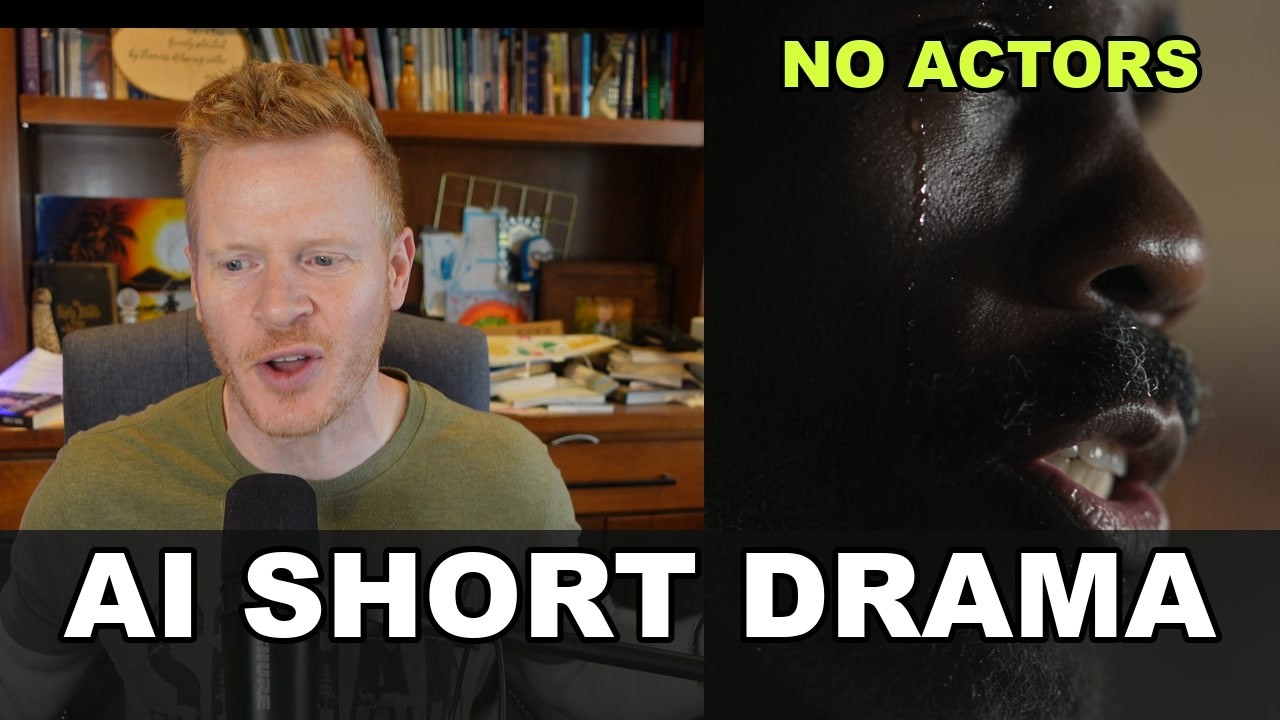
No one acted in my latest video. There was no camera crew, no actors and no set. I typed an idea into a chat and ended up with a one-minute drama episode that ends on a cliffhanger.
AI tools have gotten good enough that one person can make one of these, so I tried it two ways: on the Higgsfield website, and from inside Claude.
What a short drama is
A short drama is a series of one-minute vertical episodes. Every scene has a twist and every episode ends on a cliffhanger. On the apps, the first few episodes are free, and then you pay to unlock the next one.
People spent almost $3 billion inside short drama apps last year, according to Sensor Tower. Omdia says microdramas made about $11 billion in 2025 and projects $14 billion this year. Outside China it's smaller, but it's growing fast. Media Partners Asia has it going from $2.7 billion last year to $3.6 billion this year, and Adjust says the apps were downloaded about 2.3 billion times last year.
That's the money the apps are making, not the creators. I'm not promising anyone anything. This is a test side hustle.
Way one: the Higgsfield website
Higgsfield's Short Drama tool takes a script and turns it into a finished episode. It casts the characters, builds the locations and makes every scene.
I wrote a one-minute script with Claude first. A delivery driver scans the last box on her route, and it's addressed to her. The opening is what makes people stay in the first two seconds. The cliffhanger is what brings them back for episode two.
- I uploaded the script as a markdown file, set it to 9:16 vertical and kept the default cinematic style.
- Analyzing the script cost 20 credits and took about eight minutes. It split the story into scenes, characters, locations and props.
- Generating the cast cost 24 credits. I got four face options per character, picked the ones I liked, and it built character sheets so each face stays the same from every angle.
- Planning episode one cost 76 credits. Then I generated a 480p draft.
The draft was close, but I caught two problems. Nina's name was spelled wrong, and the old man on the porch was talking to her while she sat in her car out on the street. How could they hear each other? I told the built-in agent what was wrong. It asked how I wanted the scene staged, told me the fix would cost 93 credits, and finished the edit in about two minutes.
That's why you draft at 480p. The upscale to high quality uses the most credits, so you want every change made before you run it. The upscale itself only took about a minute and 13 seconds, and the whole episode used 769 credits, drafts included.
Way two: run it from Claude
This is the way I'd actually do it. I spend most of my day in Claude, and Higgsfield connects to it through MCP, which is a way to plug a tool into an AI chat. Higgsfield also has a short drama skill, a set of instructions Claude follows to help write the script.
With both added, I asked for a short drama, and this time I put a product inside the story.
The product was made up, a tiny keychain flashlight I called the Pocket Beam. A night shift nurse gets locked in a dark hospital supply room during a blackout, and the only thing that gets her out in time is that flashlight. My one rule was that it had to be part of the action. Nobody says a slogan or a price.
Claude planned four episodes and wrote the first script in about two minutes, then handed it to Higgsfield. I picked 720p and step-by-step mode so I could check things as they went. Making the clips was quoted at 476 credits and about 10 minutes, and nothing was charged until I approved it.
It came out intense and ends on a cliffhanger. There are things I'd do differently, and I could keep working with Claude to get it exactly how I want, but for a first take it's pretty good. Since it all lives in one chat, you could turn it into a routine.
Why the product has to do something
If someone holds the product up, reads a pitch and says a price, that's just an ad, and people scroll past it. When the flashlight gets her out of the room, it's part of the story. In real life that could be your own product, or one you have an affiliate link for.
Ways a creator could earn from this
None of these are promises, just angles I thought of:
- Product placement, like the Pocket Beam
- A series people want to binge, posted on YouTube and monetized there
- Your series on one of the short drama platforms where viewers pay to unlock episodes
- A small site of your own where you charge for it
Try it yourself
This video was sponsored by Higgsfield. If you want to follow along, you can try Higgsfield Short Drama here.
Higgsfield works best on a desktop computer. They don't have a mobile app, so if you see a Higgsfield app in the App Store or Play Store, it isn't theirs.
Let me know if you want to see episode two of either series.